
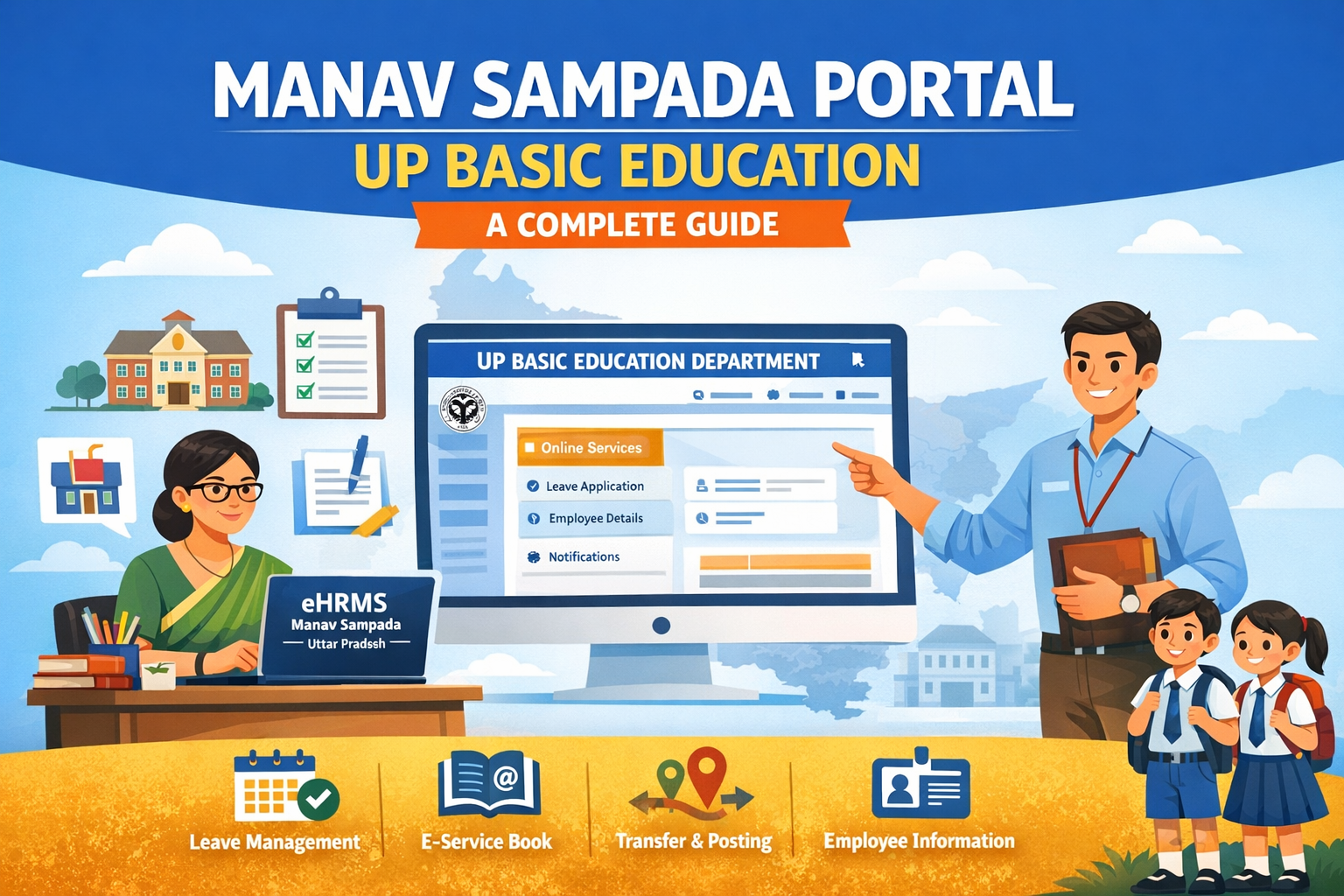
Manav Sampada Portal UP Basic Education in today’s digital age, government departments across India are embracing technology to make administration smoother, faster, and more transparent. One such initiative is the Manav Sampada Portal, introduced by the Government of Uttar Pradesh for the Basic Education Department. This portal has become a vital tool for teachers, staff, and administrators, helping them manage service-related tasks online without the need for endless paperwork.What is the Manav Sampada Portal?
What is the Manav Sampada Portal?
The Manav Sampada Portal UP Basic Educationis an online platform designed to manage human resource functions for government employees. In Uttar Pradesh, it is specifically used by the Basic Education Department to streamline processes like:
- Employee data management
- Leave applications
- Transfers and postings
- Service records
- Online communication between staff and administration
Why It Matters for UP Basic Education
Manav Sampada Portal UP Basic Education use this portal by click.
- Centralizing Employee Records: Every teacher and staff member has a digital profile.
- Simplifying Leave Management: No more physical applications—everything is online.
- Ensuring Transparency: Transfers and postings are recorded digitally, reducing favoritism or bias.
- Saving Time: Teachers can focus on teaching instead of running around for administrative approvals.
Key Features of the Portal
The Manav Sampada Portal UP Basic Education Sampada Portal offers several features that make life easier for teachers and staff:
- Employee Registration: Each employee gets a unique ID and profile.
- Leave Application: Teachers can apply for casual leave, medical leave, or maternity leave online.
- Transfer Requests: Requests for transfers are submitted and tracked digitally.
- Service Book Management: Digital service records ensure accuracy and easy access.
- Reports & Analytics: Administrators can generate reports on staff strength, vacancies, and postings.
- Mobile Access: Many features are accessible via mobile, making it convenient for teachers in rural areas.
How Teachers Can Use the Portal
Manav Sampada Portal UP Basic Education in today’s digital age, government departments across India are embracing technology to make administration smoother, faster, and more transparent.teachers, the portal is a blessing. Here’s how they can use it effectively:
- Login with Employee ID: Each teacher is given login credentials.
- Update Personal Information: Ensure your profile is accurate with correct details.
- Apply for Leave: Submit leave requests online and track approval status.
- Check Transfer Orders: Stay updated on postings and transfers.
- Download Service Records: Access your digital service book anytime.
Benefits of the Manav Sampada Portal
The portal is not just about convenience—it brings real benefits:
- Transparency: Eliminates favoritism in transfers and postings.
- Efficiency: Reduces delays in approvals and communication.
- Accessibility: Teachers in remote areas can access services online.
- Accountability: Digital records make it easier to track performance and attendance.
- Empowerment: Teachers feel more in control of their service-related matters.
Challenges Faced by Teachers
While the portal is a great initiative, some challenges remain for Manav Sampada Portal UP Basic Education :
- Technical Glitches: Slow servers during peak times.
- Digital Literacy: Some teachers, especially in rural areas, struggle with online systems.
- Connectivity Issues: Poor internet access in remote villages.
Final Thoughts
The Manav Sampada Portal UP Basic Education is a game-changer. It has transformed how teachers and staff interact with the administration, making processes faster, fairer, and more transparent. While challenges remain, the portal is a step in the right direction toward modernizing education governance in Uttar Pradesh.
For Manav Sampada Portal UP Basic Education teachers, it means less paperwork, more clarity, and greater empowerment. For administrators, it means better data management and accountability. And for students, it indirectly means that their teachers can focus more on teaching rather than bureaucracy